
From Folk To Fabric
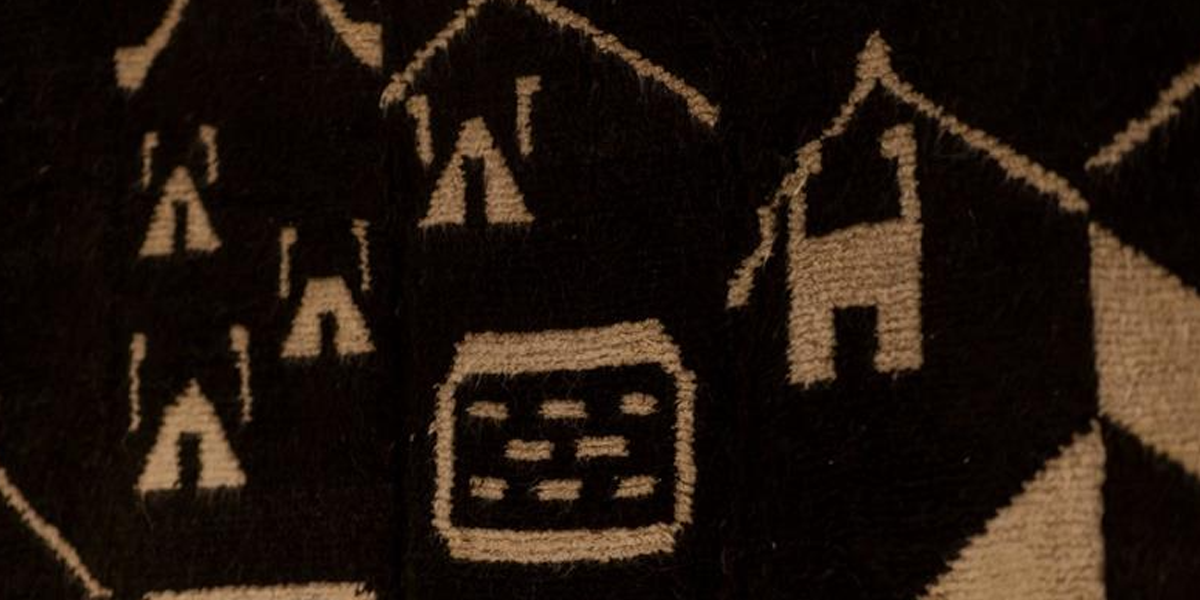
A visual rhetoric, textiles in the Himalayan tradition serve as canvases for recording myths and legends, sharing folktales, and passing on values and systems from one generation to the next.

In the northern and northeastern stretches of India, textiles are living expressions of oral storytelling, cultural values, and community identity. Across these geographies, mythologies explain why women weave. In a tale recounted in Ladakh, demons once roamed the earth causing destruction. A lama, in an attempt to pacify them, taught the male demons religion – but the female demons remained untamed. So, he taught them to weave, and through the act of weaving, they transformed into women. But they had to keep weaving – or risk becoming demons again. This story, both cautionary and powerful, reveals how craft can be used to encode moral instruction, reinforce gender roles, and enshrine the domestic as a stabilising force in society.
Among the Tangkhul Nagas of Manipur, the intricate traditional textile Zingtai Kashan was born of a legend where a fairy taught a gifted girl, Mansingla, the sacred designs that define their textiles today. In another tale, Yonangla Kashung Philava dreamt the recipe for the dye of the Luirim Kachon textile. Even today, these textiles become devices for transmitting stories, marking identity, and capturing histories that have never been written down.
Among the Bodo of Assam, weaving is traced to two fairy sisters, Asagi and Bwisagi, who drew motifs from nature, ferns, pigeon eyes, and the wink of a peacock. The Dokhona, a traditional wrap worn by Bodo women, contains these designs, where each hue has its own identity and even the near absence of black itself becomes a cultural code.
In Himachal Pradesh, the Tsug-den rugs carry symbols like dragons and snow lions – ancestral guardians that narrate tales of Tibetan craft heritage and embody values of protection and power. In Kashmir, Namda felted carpets, said to have been brought by the Sufi saint Shah-e-Hamdan, are steeped in the pastoral life of Himalayan shepherds, speaking to the folk intimacy with the land.
Similarly, the Loi shawl of Uttarakhand tells a story of pastoral life and emphasises local hospitality. Woven by hands calloused with labour and dyed in earthy hues, the Loi is offered to guests as a gesture of warmth, used by shepherds as a protective second skin and treasured in village homes for generations.
Journeying Across The Himalayas - Partner with Us
If you're an individual, collective, brand, or organisation interested in partnering with us – as a programming collaborator, supporter or in any other capacity – we'd love to hear from you!
Please fill in the form below to help us understand how we might collaborate.
This field is required
This field is required
This field is required
This field is required
Type of Participation / Partnership*
This field is required
Which of the following aligns best with your primary interest in partnering for this festival?
This field is required
This field is required
Stay Connected
This field is required
By checking this box, I acknowledge, agree and hereby voluntarily consent that (i) Eicher Group
Foundation (EGF) may use the information I share with them, to communicate with me through e-mails,
text messages and calls, in order to provide information related to EGF’s CSR projects, seeking my
feedback on the JATH event, gaining insights, statutory compliance, and/or for promotional and
marketing purposes, and (ii) EGF may share my information with third parties, in order to
facilitate/fulfil my requests and provide services. All information provided by me will be secured
and processed as per EGF’s Privacy Policy.
I have fully read, understood and accept the Privacy Policy.
This field is required